Subscribe For Weekly New Recipes!

Delia Smith Orange Trifle Recipe
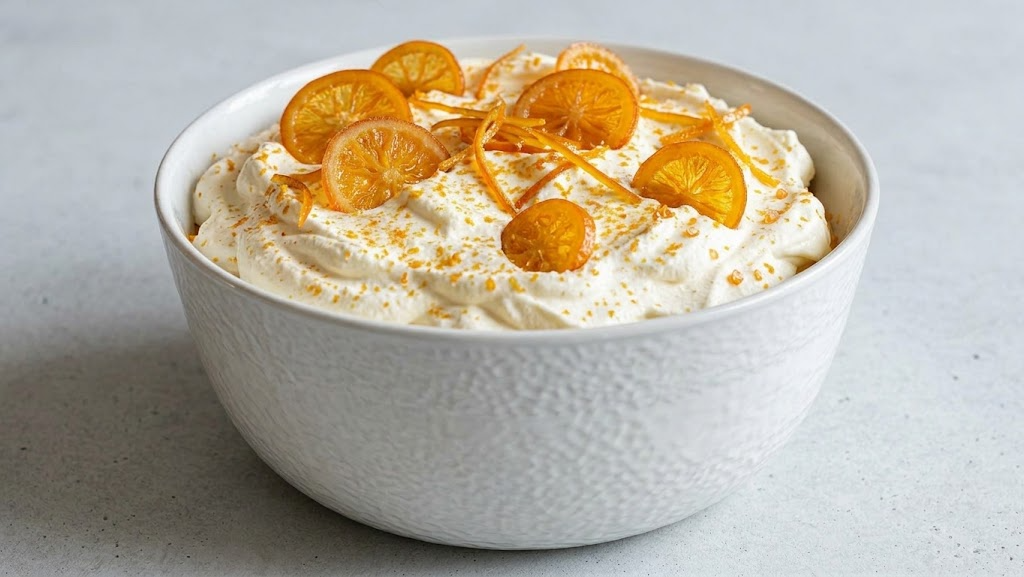
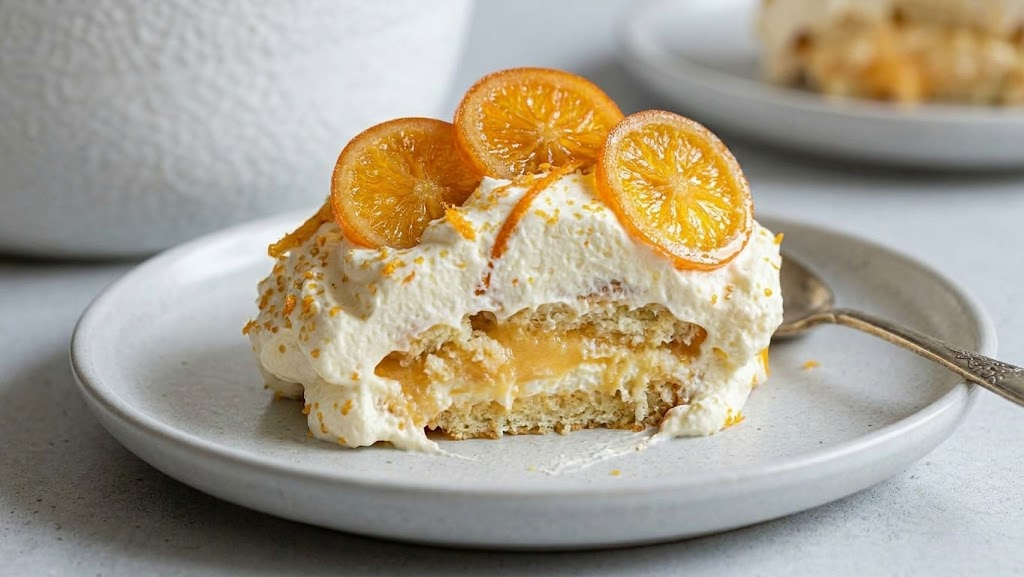
This orange trifle is a proper British pudding: light orange sponge soaked with citrus (and a splash of sherry if you like), set with a bright orange jelly layer, then finished with silky custard and a cloud of softly whipped cream. The flavours are clean and sunny, with that classic trifle contrast of soft cake, wobbling jelly, and creamy layers. It’s an easy, make-ahead dessert with a few simple stages, and it looks beautiful in a glass bowl. Allow about 5 hours in total, including chilling time.
Ingredients
For the orange sponge (or use shop-bought cake)
- 200g unsalted butter, softened
- 200g caster sugar
- 4 large eggs
- 200g self-raising flour
- Finely grated zest of 2 oranges
- 2 tbsp milk
- Pinch of fine salt
For the orange soak and jelly layer
- 3 to 4 tbsp medium sherry or Grand Marnier (optional)
- 150ml fresh orange juice
- 1 orange jelly pack (135g)
- 450ml boiling water
- 2 to 3 oranges, peeled and segmented (or 2 x 300g tins mandarins, drained)
For the custard layer
- 600ml whole milk
- 150ml double cream
- 1 tsp vanilla extract
- 6 egg yolks
- 70g caster sugar
- 25g cornflour
- Finely grated zest of 1 orange
For the cream topping
- 400ml double cream, cold
- 2 tbsp icing sugar
- 1 tsp vanilla extract
- 1 to 2 tbsp orange marmalade, warmed slightly (optional)
To finish (optional)
- Toasted flaked almonds
- Extra orange zest or chocolate curls
How to Make This Orange Trifle
Bake the orange sponge
- Prepare the oven: Preheat the oven to 180°C (160°C fan). Grease and line a 23 x 33cm traybake tin with baking parchment so the sponge lifts out easily.
- Cream butter and sugar: Beat the softened butter and caster sugar for 2 to 3 minutes until pale and fluffy. This gives you a lighter sponge that soaks up the orange beautifully.
- Add eggs: Beat in the eggs one at a time. If the mixture looks like it might curdle, add a spoonful of the flour.
- Mix in dry ingredients: Fold in the self-raising flour, orange zest, salt, and milk until just combined. Stop as soon as you can’t see any dry flour.
- Bake: Spread into the tin and level the top. Bake for 18 to 22 minutes, until golden, springy in the centre, and a skewer comes out clean.
Cool and prep the base
- Cool completely: Leave the sponge in the tin for 10 minutes, then lift out and cool fully on a wire rack. Warm sponge will blur your trifle layers.
- Cut and layer: Cut the sponge into bite-size chunks and arrange them in the bottom of a large glass trifle bowl.
- Add fruit and soak: Tuck in the orange segments (or drained mandarins). Drizzle over the sherry or liqueur if using.
Make the orange jelly layer
- Dissolve the jelly: Put the jelly cubes into a heatproof jug. Pour over the boiling water and stir until completely dissolved.
- Add orange juice: Stir in the fresh orange juice, then leave at room temperature until the jelly is cool and just starting to thicken. It should feel syrupy, not warm.
- Pour and chill: Pour the cooled jelly over the sponge and fruit. Refrigerate for 2 to 3 hours, or until properly set.
Make the custard (silky and sliceable)
- Whisk yolks, sugar, and cornflour: In a bowl, whisk the egg yolks with the caster sugar and cornflour until smooth. Stir in the orange zest.
- Heat the dairy: In a saucepan, heat the milk and double cream until steaming and just below simmering. Do not let it boil hard.
- Temper the yolks: Pour a little of the hot milk into the yolk mixture, whisking constantly. Then pour everything back into the saucepan.
- Cook until thick: Cook over low to medium-low heat, whisking all the time, until the custard thickens to a gentle, spoon-coating consistency. This usually takes 4 to 7 minutes.
- Cool properly: Remove from the heat and whisk in the vanilla. Pour into a bowl and cover with cling film touching the surface to prevent a skin. Cool completely, then chill until cold.
Assemble and finish
- Add the custard: Once the jelly is fully set and the custard is cold, spoon the custard over the jelly layer and level gently.
- Whip the cream: Whip the double cream with icing sugar and vanilla to soft peaks. Keep it soft so it sits light on top and doesn’t split.
- Top and decorate: Pile the cream over the custard. For a glossy finish, lightly ripple over warm marmalade. Scatter with toasted flaked almonds and a little extra orange zest if you like.
- Chill before serving: Refrigerate for at least 1 hour so the layers settle and the trifle slices more neatly.
Tips
How do I stop the sponge going soggy?
Let the jelly cool until it’s no longer warm and is just starting to thicken before you pour it in. Warm jelly soaks too quickly and can turn the sponge into a soft paste rather than distinct pieces.
Why is my custard lumpy?
Custard usually goes lumpy if the heat is too high or it isn’t whisked constantly. Keep the heat low to medium-low and whisk without stopping. If it does get a few lumps, take it off the heat and whisk briskly, or pass it through a sieve while still warm.
How do I get clean, pretty layers in the bowl?
Make sure each layer is cold before adding the next: set jelly, then cold custard, then whipped cream. A glass bowl helps, and leveling each layer with the back of a spoon makes a big difference.
Can I make it a day ahead without the cream weeping?
Yes. Whip the cream to soft peaks and keep it on the thicker side of soft, not stiff. If you want extra insurance, add 2 tbsp mascarpone to the cream while whipping to help it hold.
Serving Suggestions
- Serve straight from the fridge with extra orange segments on the side.
- Add a small glass of dessert wine or a pot of tea for a classic finish.
- For a festive version, scatter a little grated dark chocolate over the cream.
- Pair with crisp almond biscuits for extra crunch.
Storage
Room temperature
Keep the trifle out of the fridge only while serving. Because it contains custard and cream, it should not sit at room temperature for more than 1 to 2 hours.
Refrigerator
Cover the bowl well and refrigerate for up to 2 days. The layers will still taste lovely on day two, though the sponge will soften more as it stands.
Freezing
Freezing is not recommended for assembled trifle because custard and cream can split and turn grainy after thawing. If you want to get ahead, freeze the baked sponge on its own for up to 2 months, then thaw and assemble fresh.
Nutrition
- Calories: 420 kcal
- Carbohydrates: 45g
- Protein: 7g
- Fat: 24g
- Saturated fat: 14g
- Sodium: 180mg
Nutrition values are estimates and will vary depending on ingredients used and portion size.
FAQs
Can I use shop-bought cake instead of baking the sponge?
Yes. Madeira cake, Swiss roll, or sponge fingers all work well. Use about 300–350g, cut into chunks, then continue with the soak, fruit, jelly, custard, and cream layers as written.
Do I have to use alcohol in an orange trifle?
No, it’s completely optional. Swap the sherry or liqueur for extra orange juice, or use a little cooled orange syrup (equal parts orange juice and sugar warmed until dissolved) for a more fragrant sponge.
How far ahead can I assemble the trifle?
You can assemble it up to 24 hours ahead. For the neatest finish, add the cream topping the day you plan to serve, but it will still hold up well overnight if covered and refrigerated.
Why won’t my jelly set in the trifle bowl?
Jelly can struggle to set if it’s made too weak (too much liquid) or if you pour it in while still warm. Measure the water carefully, cool it before pouring, and chill for long enough. If you added fresh pineapple or kiwi, the enzymes can prevent setting, so avoid those fruits in the jelly layer.
Can I use ready-made custard instead of homemade?
Yes. Choose a thick fresh custard (not pouring custard) so the layer holds its shape. You’ll need roughly 750ml. Chill it well before spooning over the set jelly layer.
Orange Trifle
Course: DessertCuisine: BritishDifficulty: EasyServings
12
portionsPrep time
35
minutesCooking time
20
minutesTotal time
300
minutesCalories
420
kcal55
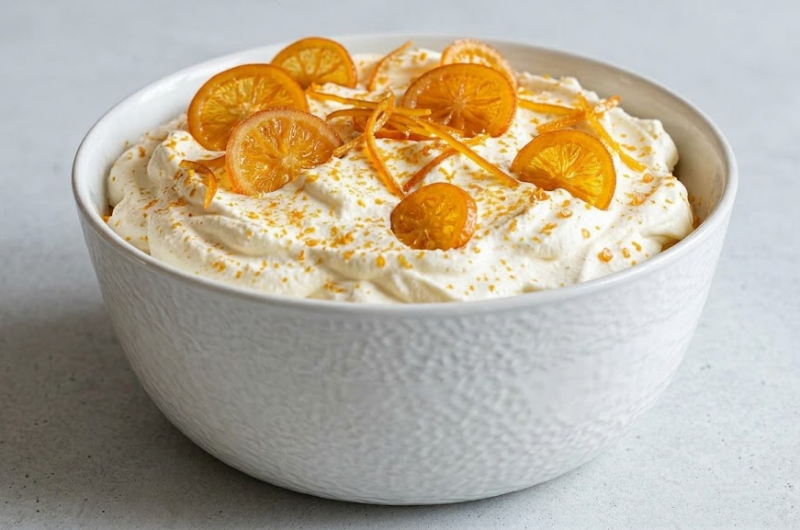
minutesClassic British orange trifle with light orange sponge, a bright citrus jelly layer, silky custard, and softly whipped cream. A make-ahead dessert that always looks impressive.
Ingredients
- Orange sponge (or use 300–350g shop-bought Madeira cake or Swiss roll)
200g unsalted butter, softened
200g caster sugar
4 large eggs
200g self-raising flour
2 oranges, finely grated zest only
2 tbsp milk
Pinch of fine salt
- Orange soak + jelly layer
3–4 tbsp medium sherry or Grand Marnier (optional)
150ml fresh orange juice (from about 2 oranges)
1 orange jelly pack (135g)
450ml boiling water
2–3 oranges, peeled and segmented (or 2 x 300g tins mandarins, drained)
- Custard layer
600ml whole milk
150ml double cream
1 tsp vanilla extract
6 egg yolks
70g caster sugar
25g cornflour
1 orange, finely grated zest only
- Cream topping
400ml double cream, cold
2 tbsp icing sugar
1 tsp vanilla extract
1–2 tbsp orange marmalade (warmed slightly, optional for gloss)
- To finish (optional, but lovely)
Toasted flaked almonds
Extra orange zest or chocolate curls
Directions
- Preheat the oven to 180°C (160°C fan). Grease and line a 23 x 33cm traybake tin.
- Make the orange sponge: beat butter and sugar, add eggs, then fold in flour, zest, milk and salt. Bake 18–22 minutes until springy.
- Cool the sponge completely, then cut into chunks.
- Dissolve orange jelly in boiling water, stir in orange juice, and cool until just starting to thicken.
- Layer sponge and orange segments in a trifle bowl, spoon over sherry if using, then pour over cooled jelly. Chill until set.
- Make custard: whisk yolks, sugar and cornflour. Heat milk and cream, temper into yolks, then cook gently until thick. Cover and cool.
- Spoon cold custard over the set jelly layer. Chill again.
- Whip cream with icing sugar and vanilla to soft peaks, then pile on top. Decorate and serve.
Notes
- For a shortcut, use shop-bought Madeira cake or Swiss roll and good-quality fresh custard.
- Always cool the jelly before pouring so it doesn’t melt the sponge into mush.
- Keep the custard covered with a layer of cling film touching the surface to prevent a skin.
- Assemble the trifle a day ahead for the best flavour and clean layers.