Subscribe For Weekly New Recipes!

Delia Smith Fruit Scones Recipe
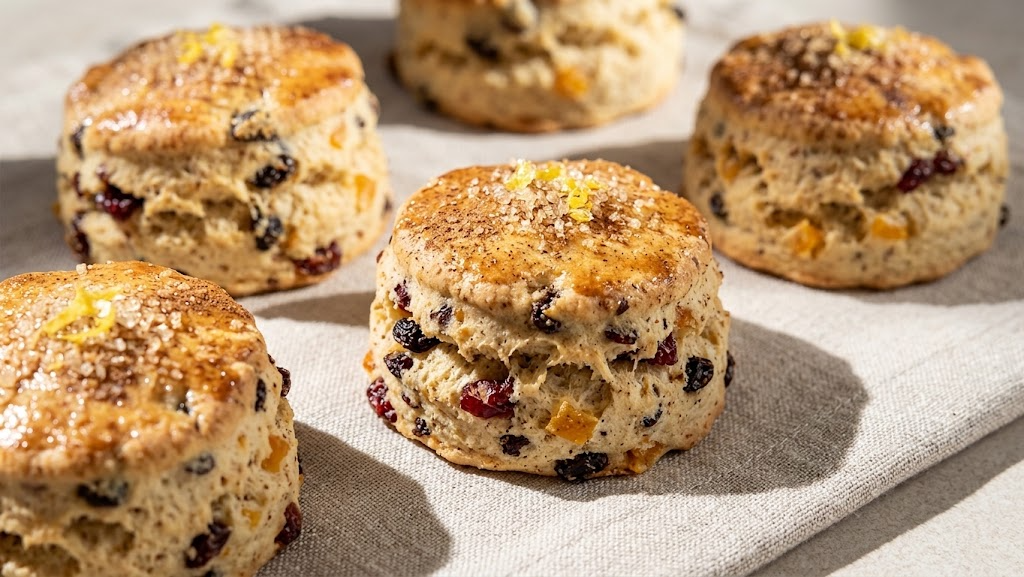
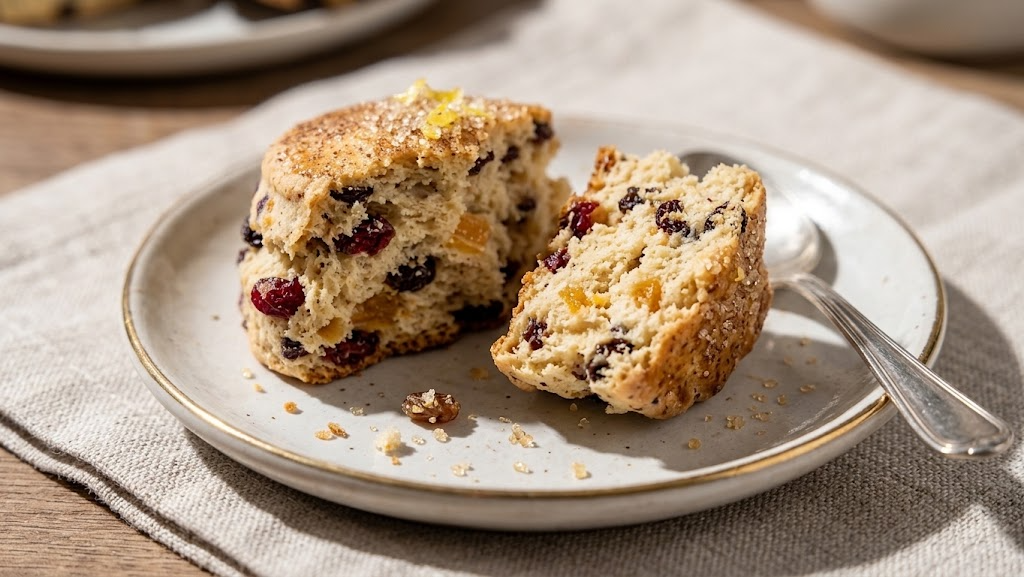
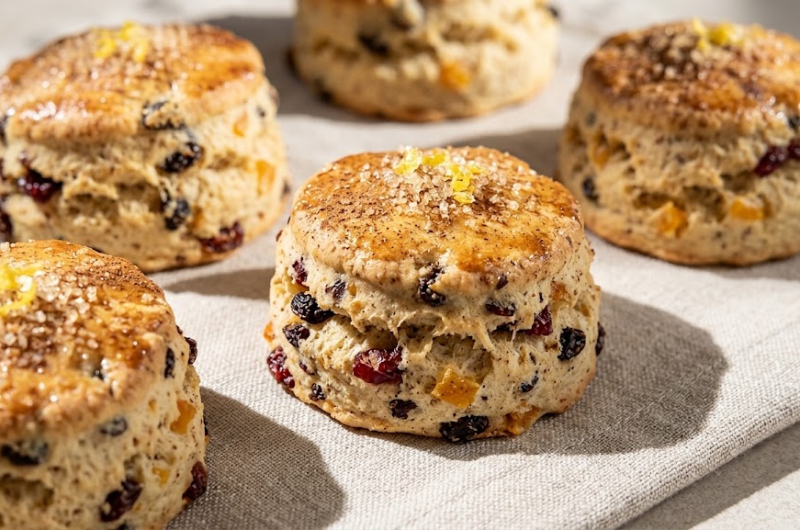
These classic Delia Smith fruit scones are everything you want with a proper cream tea: light and well risen, with a tender crumb and sweet bursts of juicy sultanas. They taste rich and buttery without being heavy, and they bake quickly so you can go from mixing bowl to warm scones in under half an hour. The method is straightforward and beginner-friendly as long as you handle the dough gently. Total time is about 30 minutes, including a short cool-down before serving.
Ingredients
For the fruit scones
- 350g self-raising flour, plus extra for dusting
- 1 tsp baking powder
- 1/2 tsp fine salt
- 85g unsalted butter, cold and diced
- 50g caster sugar
- 100g sultanas
- 1 large egg
- Whole milk, enough to make the egg and milk mixture up to 200ml total
To serve (optional, but traditional)
- Soft unsalted butter
- Strawberry jam (or raspberry)
- Clotted cream
- Icing sugar, for dusting
How to Make Delia Smith Fruit Scones Recipe
Oven preparation
- Prepare the oven: Preheat the oven to 220°C or 200°C fan. Place a shelf in the middle so the scones rise evenly and colour nicely.
- Prep the tray: Lightly flour a baking tray or line it with baking parchment. This helps prevent sticking without making the bases greasy.
Mixing the dough
- Combine the dry ingredients: Sift the self-raising flour, baking powder, and salt into a large bowl.
- Rub in the butter: Add the cold diced butter and rub it in with your fingertips until the mixture looks like fine breadcrumbs. Work quickly so the butter stays cool.
- Add sugar and fruit: Stir in the caster sugar and sultanas so they’re evenly distributed.
- Make the liquid: Beat the egg in a measuring jug, then top up with milk to 200ml total. Reserve a splash for glazing.
- Bring it together: Pour most of the egg and milk into the bowl and use a table knife to mix, cutting through the dough until it starts to clump. Add a little more liquid only if it looks dry.
- Handle gently: Tip onto a lightly floured surface and knead very lightly, just a few turns, until you have a soft dough. Overworking is the fastest way to end up with tough scones.
Shaping and cutting
- Pat to thickness: Pat (do not aggressively roll) the dough to about 2.5cm thick. Keeping them thick helps the rise.
- Cut the scones: Dip a 5cm cutter in flour, then press straight down and lift straight up. Avoid twisting, which can seal the edges and limit the rise.
- Glaze: Arrange on the tray with a little space between each one and brush the tops with the reserved egg and milk mixture. Keep the glaze on the top only, not the sides.
Baking
- Bake: Bake for 10 to 14 minutes until well risen and golden. They should feel light when lifted and sound slightly hollow if you tap the base.
- Watch the colour: If your oven runs hot, start checking at 10 minutes. A high temperature gives lift, but you don’t want the tops to darken too quickly.
Cooling
- Cool briefly: Transfer the scones to a wire rack and let them cool for about 10 minutes. This sets the crumb so they split neatly.
Assembling
- Serve the traditional way: Split while still slightly warm and add butter (optional), jam, and clotted cream. Finish with a light dusting of icing sugar if you like.
Tips
Why did my scones turn out tough?
Tough scones usually come from overworking the dough or adding too much extra flour while shaping. Mix until it just comes together, then knead lightly and briefly. A soft, slightly tacky dough is better than a dry one.
How do I get scones that rise higher?
Use a hot oven, keep the dough thick (around 2.5cm), and cut with a sharp cutter using a straight up-and-down motion. Also make sure your baking powder is fresh, it loses strength over time.
Why did my scones spread instead of rising?
If the butter gets too warm, it can melt early and cause spreading. Work quickly, use cold butter, and avoid warming the dough with your hands. If your kitchen is hot, pop the cut scones on the tray into the fridge for 10 minutes before baking.
How can I stop the fruit from catching on the cutter?
Press the dough together firmly before cutting so the fruit sits inside the dough rather than on the surface. Flour the cutter each time, and if needed, use a slightly larger cutter so you’re not forcing it through tightly packed fruit.
Serving Suggestions
- Clotted cream and strawberry jam with a pot of strong tea
- Lemon curd and whipped cream for a brighter, tangy filling
- Butter only, served warm alongside a bowl of fresh berries
- With a slice of mature Cheddar for a sweet-savoury contrast
Storage
Room temperature
Keep completely cooled scones in an airtight container for up to 2 days. If they soften, warm them for a few minutes in a low oven to refresh.
Refrigerator
Scones go stale faster in the fridge, so I only refrigerate them if they’re already filled with cream. Once filled, store in a covered container in the fridge and eat within 24 hours.
Freezing
Freeze unfilled, cooled scones in a freezer bag or airtight container for up to 3 months. Defrost at room temperature, then warm at 160°C (140°C fan) for 5 to 8 minutes. For best texture, freeze the day you bake them.
Nutrition
- Calories: 240 kcal
- Carbohydrates: 41 g
- Protein: 6 g
- Fat: 6 g
- Saturated fat: 3 g
- Sodium: 220 mg
Disclaimer: Nutrition values are estimates and will vary depending on exact ingredients, brands, and portion size.
FAQs
Can I make Delia Smith fruit scones with plain flour?
Yes. Use 350g plain flour plus 2 tsp baking powder (instead of 1 tsp), then sift well to distribute the raising agent evenly. The texture will be very close to using self-raising flour.
What temperature is best for baking fruit scones?
A hot oven helps scones rise quickly before the butter fully melts. Bake at 220°C (200°C fan) on the middle shelf for 10–14 minutes until well risen and golden.
Can I use raisins or dried cranberries instead of sultanas?
Absolutely. Swap the sultanas for raisins, currants, or dried cranberries in the same quantity (100g). If the fruit feels very dry, soak briefly, then drain and pat dry so it doesn’t add extra moisture.
How do I keep the tops shiny and golden?
Brush the tops lightly with the reserved egg and milk mixture just before baking. Aim to keep the glaze off the sides, as it can stick and inhibit rising.
Can I make the scone dough ahead of time?
Scones are best baked straight after mixing. If you need to prep ahead, cut the scones, place them on the tray, cover, and chill for up to 2 hours, then bake from cold, adding 1–2 minutes if needed.
Why didn’t my fruit scones rise even though I followed the recipe?
Common causes are twisting the cutter (which can seal the edges), overworking the dough, or old baking powder. Also check your oven is fully preheated before the tray goes in.
Delia Smith Fruit Scones Recipe
Course: BakingCuisine: BritishDifficulty: EasyServings
10
sconesPrep time
15
minutesCooking time
12
minutesTotal time
27
minutesCalories
240
kcal27
minutesLight, tender British fruit scones made with sultanas, finished with a glossy top and served the traditional way with jam and clotted cream.
Ingredients
- For the fruit scones
350g self-raising flour, plus extra for dusting
1 tsp baking powder
1/2 tsp fine salt
85g unsalted butter, cold and diced
50g caster sugar
100g sultanas
1 large egg
Whole milk, enough to make the egg + milk mixture up to 200ml total
- To serve (optional, but traditional)
Soft unsalted butter
Strawberry jam (or raspberry)
Clotted cream
Icing sugar, for dusting (optional)
Directions
- Preheat the oven to 220°C (200°C fan). Lightly flour a baking tray or line it with baking parchment.
- Sift the self-raising flour, baking powder, and salt into a bowl. Rub in the cold butter with your fingertips until it looks like fine breadcrumbs.
- Stir in the caster sugar and sultanas.
- In a jug, beat the egg, then add enough milk to make it up to 200ml in total. Pour most of it into the bowl, keeping a splash back for glazing.
- Bring the dough together with a table knife, then tip onto a floured surface and knead very lightly, just until smooth.
- Pat the dough to about 2.5cm thick. Cut into rounds with a floured cutter and place on the tray. Brush the tops with the reserved egg-milk mixture.
- Bake for 10–14 minutes until well risen and golden. Transfer to a wire rack to cool for 10 minutes.
- Split and serve slightly warm with butter, jam, and clotted cream.
Notes
- Handle the dough as little as possible for a lighter scone.
- A sharp cutter and a straight up-and-down press helps the scones rise evenly.
- If your fruit is very dry, soak it in hot tea for 5 minutes, then drain and pat dry before adding.