Subscribe For Weekly New Recipes!

Delia Smith Lemon Curd Recipe
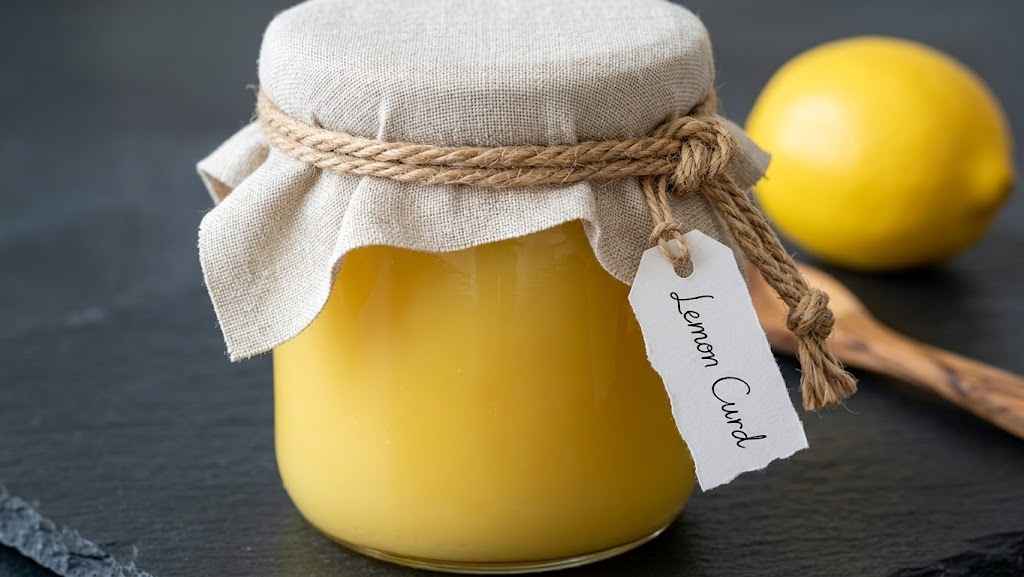
This is my go-to take on Delia Smith’s classic lemon curd, made the traditional way with eggs, butter, sugar, and plenty of fresh lemon. It’s silky, glossy, and richly tangy, with that proper spoon-coating thickness that feels luxurious on toast or folded through cream. The method is simple and beginner-friendly as long as you keep the heat gentle and stir patiently. Total time is about 30 minutes, plus cooling.
Ingredients
For the lemon curd
- 4 unwaxed lemons, zest finely grated and juice strained (about 150ml juice)
- 200g caster sugar
- 100g unsalted butter, cut into small cubes
- 4 large eggs
For sterilising the jars (recommended)
- 2 small jam jars with lids (about 225ml each)
- Hot soapy water, for washing
How to Make Delia Smith Lemon Curd Recipe
- Prepare the oven: Heat the oven to 140°C (120°C fan). Wash 2 small jars and lids in hot soapy water, rinse well, then place the jars (not the rubber seals, if you have them) on a tray and warm in the oven for 10–15 minutes. This gives you clean, warm jars ready for the curd.
- Set up your pan: Bring a small pan of water to a very gentle simmer. Choose a heatproof bowl that sits over the pan without the base touching the water (a double boiler setup).
- Prep the lemons: Finely zest the lemons, then juice them. Strain the juice through a sieve to catch any pips and thicker bits of pulp.
- Start the mixture: Add the butter, caster sugar, lemon zest, and strained lemon juice to the heatproof bowl. Set it over the simmering water and stir until the butter has melted and the sugar no longer feels gritty.
- Mix in the eggs: Crack the eggs into a jug and beat lightly with a fork. Pour them into the warm lemon mixture in a steady stream, stirring constantly as you go so the eggs blend in smoothly.
- Cook gently (the “baking” stage, but on the hob): Keep the heat low and stir continuously with a wooden spoon or silicone spatula, making sure you scrape around the sides and base of the bowl. Cook for 10–15 minutes, or until the curd thickens enough to coat the back of a spoon. If you run a finger through it, the line should hold.
- Strain for a silkier finish: For extra-smooth lemon curd, strain it through a fine sieve into a jug. This removes any bits of zest that feel too bold and catches any tiny eggy strands.
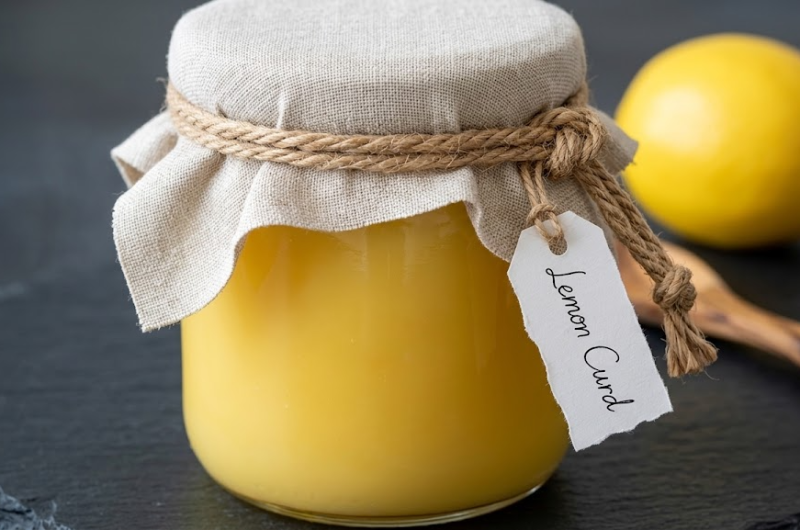
- Cool: Pour the hot curd into the warm sterilised jars, leaving a little space at the top. Let it cool uncovered for 20–30 minutes, then lid and refrigerate until fully chilled and set.
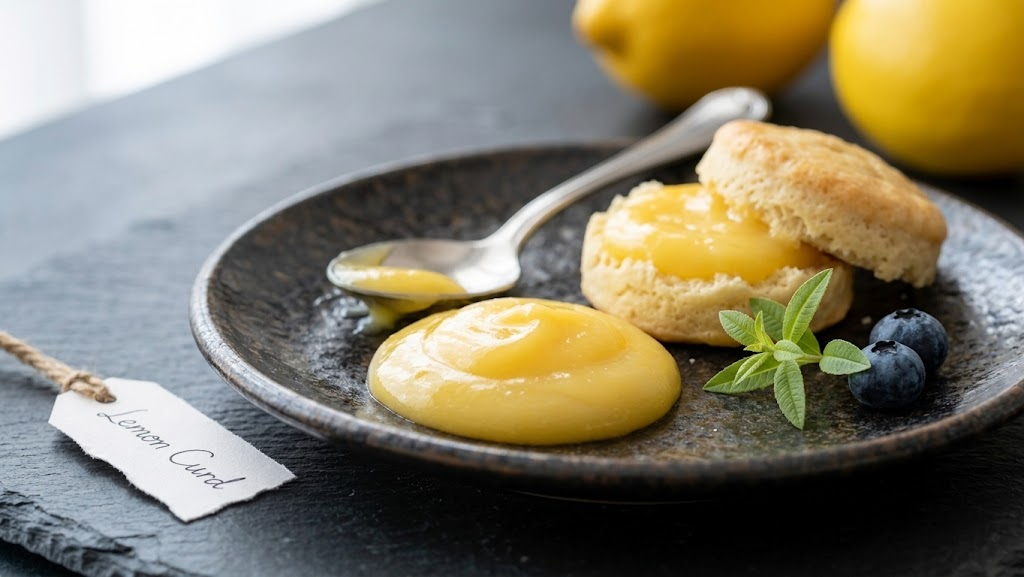
- Assemble and use: Once cold, the lemon curd is ready to spread, spoon, swirl, and bake with. It thickens further as it chills, so don’t worry if it looks slightly looser while warm.
Tips
Why did my lemon curd split or look greasy?
This nearly always comes down to heat. Keep the water at a gentle simmer and never let the curd boil. If it starts to look oily, take it off the heat and whisk briskly to bring it back together, then carry on more gently.
How do I know when lemon curd is thick enough?
The simplest test is the spoon test: it should coat the back of a spoon, and a finger drawn through should leave a clean line. If you have a thermometer, aim for about 75–80°C.
How can I stop bits of cooked egg in my curd?
Add the eggs slowly while stirring, and keep the heat low. If you still get a few strands, straining through a fine sieve fixes it instantly and gives you a beautifully smooth finish.
How do I make it more or less sharp?
For a sharper curd, use an extra lemon for zest and a splash more juice. For a softer, rounder flavour, reduce the zest slightly or add 1–2 tablespoons extra butter at the end for richness.
Serving Suggestions
- Spread thickly on toast, crumpets, or warm scones
- Swirl through Greek yogurt with berries and crushed biscuits
- Fill a Victoria sponge, lemon drizzle cupcakes, or thumbprint biscuits
- Spoon into a tart case and top with fresh fruit
- Layer with whipped cream for an easy lemon fool
Storage
Room temperature
Lemon curd is egg and butter based, so it’s best kept chilled. If you’re serving it at breakfast, bring out what you need and return the jar to the fridge promptly.
Refrigerator
Store sealed in the fridge for up to 2 weeks. Always use a clean spoon, and keep the lid tightly closed to maintain freshness.
Freezing
Lemon curd freezes well for up to 3 months. Freeze in small containers with a little headspace. Thaw overnight in the fridge and stir until smooth before using.
Nutrition
- Calories: 76 kcal
- Carbohydrates: 8 g
- Protein: 1 g
- Fat: 4 g
- Saturated Fat: 2 g
- Sodium: 20 mg
Nutrition values are estimates and will vary depending on ingredients and portion size.
FAQs
Can I make lemon curd without a double boiler?
Yes, but use very low heat and a heavy-based saucepan, stirring constantly. The double boiler is more forgiving and reduces the risk of scrambling the eggs.
How long does homemade lemon curd take to set?
It thickens as it cools, then sets properly after a few hours in the fridge. For the firmest texture, chill overnight.
Why is my lemon curd too runny?
It likely needs a little more gentle cooking time. Keep stirring over low heat until it coats the back of a spoon. Also remember it thickens further once chilled.
Can I use bottled lemon juice instead of fresh?
Fresh is best for flavour and aroma, especially because the zest does a lot of the work here. Bottled juice can taste flatter and may make the curd less vibrant.
Can I use this lemon curd for a tart filling?
Yes. For a no-bake tart, chill the curd until very thick before filling. For a baked tart, you can spoon it into a pre-baked case and bake briefly to set further, but avoid high heat to preserve the smooth texture.
Classic Lemon Curd
Course: CondimentCuisine: BritishDifficulty: EasyServings
24
tbspPrep time
10
minutesCooking time
15
minutesTotal time
30
minutesCalories
76
kcal25
minutesSilky, buttery lemon curd made the traditional way with fresh lemons, eggs, sugar, and butter. Smooth, tangy, and perfect for toast, scones, and baking.
Ingredients
4 unwaxed lemons, zest and juice (about 150ml juice)
200g caster sugar
100g unsalted butter, cut into small cubes
4 large eggs
Directions
- Sterilise 2 small jars (optional but recommended) and set aside warm.
- Zest and juice the lemons. Strain the juice to remove pips.
- Set a heatproof bowl over a barely simmering pan of water (double boiler). Add butter, sugar, zest, and lemon juice.
- Stir until the butter melts and the sugar dissolves.
- Lightly beat the eggs, then whisk into the warm lemon mixture.
- Cook gently, stirring constantly, until thick enough to coat the back of a spoon (about 10–15 minutes). Do not boil.
- Strain for extra smoothness, then pour into warm jars. Cool, cap, and refrigerate.
Notes
- Keep the heat low: lemon curd should never boil or it can split.
- For ultra-smooth curd, strain through a fine sieve before jarring.
- Use unwaxed lemons (or scrub well) since the zest flavours the curd.