Subscribe For Weekly New Recipes!

Delia Smith Béarnaise Sauce Recipe
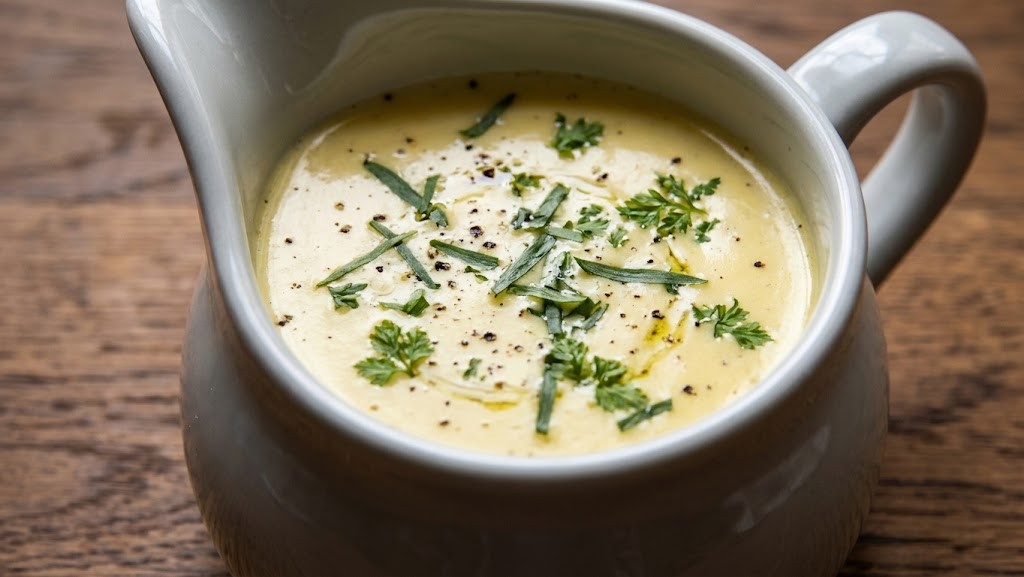
If you love a proper steakhouse finish at home, this classic béarnaise is the sauce that makes it happen. It’s rich and buttery with a gentle tang from vinegar and a bright, aniseed lift from tarragon, all wrapped up in a smooth, velvety texture. I’d call it medium difficulty, but completely doable if you keep the heat low and whisk steadily. Total time is about 20 minutes from start to serving.
Ingredients
For the tarragon reduction
- 2 tbsp white wine vinegar
- 2 tbsp dry white wine (or water)
- 1 small shallot, very finely chopped
- 1 tbsp fresh tarragon leaves, chopped
- 6 black peppercorns, lightly crushed
For the sauce
- 3 large egg yolks
- 175g unsalted butter, melted and kept warm (not hot)
- 1–2 tsp lemon juice, to taste
- Pinch of salt, plus more to taste
To finish (optional but recommended)
- 1 tbsp fresh tarragon, finely chopped
- 1 tbsp fresh chervil or parsley, finely chopped
How to Make Béarnaise Sauce
- Prepare the heat: Fill a small saucepan with 2–3cm of water and bring it to a very gentle simmer. Set a heatproof bowl over the top so it sits above the water (the base should not touch). This is your bain-marie and it keeps the eggs from overheating.
- Melt the butter: Melt the butter in a small pan over low heat, then take it off the heat and keep it warm. You want it fluid and warm to the touch, not sizzling hot, or it can break the sauce.
- Make the tarragon reduction: In a small saucepan, add the vinegar, wine (or water), shallot, chopped tarragon, and crushed peppercorns. Simmer until you have roughly 1 tablespoon of liquid left. This concentrates the flavour and gives the sauce its signature tang.
- Strain and cool slightly: Strain the reduction into a small bowl to remove the peppercorns and shallot. Let it sit for 2 minutes so it’s warm rather than piping hot, which helps protect the yolks.
- Whisk the yolks: Put the egg yolks into your heatproof bowl and whisk in the warm reduction. Whisk until smooth and lightly foamy.
- Cook the yolks gently: Place the bowl over the barely simmering water. Whisk constantly for 2–4 minutes until the mixture thickens, turns paler, and leaves a ribbon trail when you lift the whisk. If you see steam building up, lift the bowl off the heat for a few seconds and keep whisking.
- Emulsify with butter: Take the bowl off the heat. Start adding the warm melted butter in a slow, steady drizzle, whisking all the time. Go slowly at the beginning so the emulsion forms, then you can pour a little faster once it looks glossy and stable.
- Season and finish: Whisk in a pinch of salt and 1 teaspoon lemon juice. Taste and adjust with more lemon juice or salt until it tastes balanced. Stir in the chopped fresh tarragon and chervil (or parsley).
- Hold warm and serve: Keep the sauce warm for a short time only, off the heat, with the bowl resting near the warm pan. Serve immediately while it’s silky and spoonable.
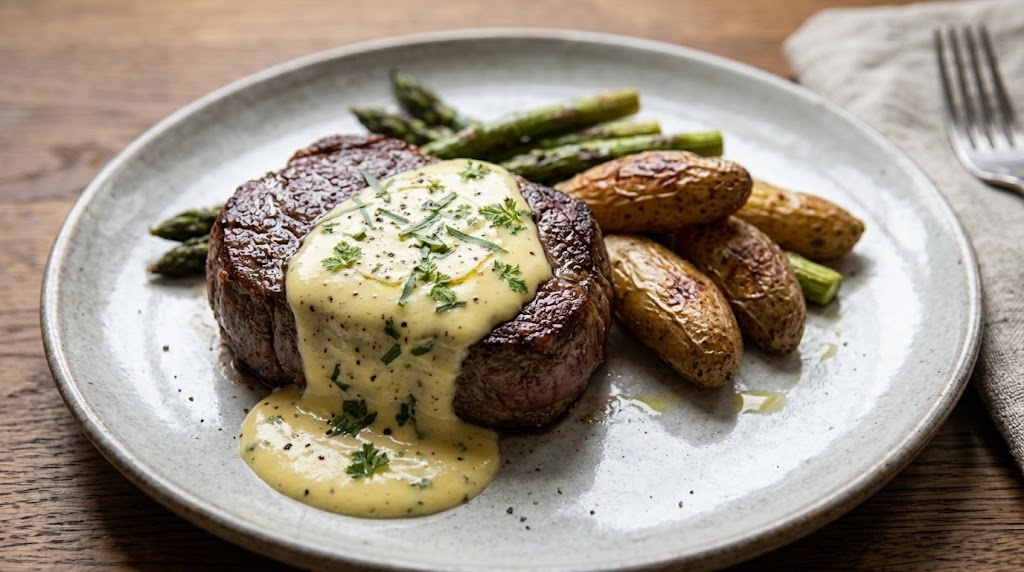
Tips for Success
Why did my béarnaise sauce split?
The usual culprit is heat that’s too high or butter that’s too hot. Keep the bain-marie at a bare simmer and add butter gradually so the yolks can absorb it.
How do I fix a split béarnaise sauce?
Put 1–2 teaspoons of warm water in a clean bowl and whisk the split sauce into it slowly, a spoonful at a time. In many cases it will come back together. If it’s badly split, whisk a fresh egg yolk with 1 teaspoon water, then slowly whisk in the split sauce.
Do I need to clarify the butter?
Not strictly. Warm melted butter works well, but clarified butter is a little more stable and less likely to split. If you want extra insurance, skim off the foam and use the clear yellow butter, leaving the milky solids behind.
How do I stop the eggs from scrambling?
Keep the water under the bowl barely simmering and whisk constantly. If the bowl feels too hot, lift it off the pan and whisk for 10 seconds, then return it.
My sauce is too thick. How can I loosen it?
Whisk in warm water 1 teaspoon at a time until it’s the consistency you want. This works better than adding more lemon juice, which can throw off the flavour balance.
Serving Suggestions
- Spoon over steak, especially fillet, sirloin, or ribeye
- Serve with salmon, cod, or grilled prawns
- Pair with asparagus, green beans, or tenderstem broccoli
- Drizzle over poached eggs for a tarragon twist on brunch
- Use as a dip for chunky chips or roast new potatoes
Storage
Room temperature
Béarnaise is best eaten straight away. For food safety and texture, keep it at room temperature for no more than 1 hour.
Refrigerator
Transfer to a covered container and refrigerate for up to 24 hours. To rewarm, do it gently: set the container in a bowl of warm (not hot) water and stir, or warm in a bowl over barely simmering water, whisking in a teaspoon of warm water to help it loosen. Avoid microwaving, as it can split in seconds.
Freezing
Not recommended. Egg-and-butter emulsions tend to split once thawed, and the texture turns greasy and grainy.
Nutrition
- Calories: 240 kcal
- Carbohydrates: 1 g
- Protein: 2 g
- Fat: 26 g
- Saturated fat: 16 g
- Sodium: 120 mg
Disclaimer: Nutrition values are estimates and can vary based on ingredient brands, salt levels, and portion sizes.
FAQs
Can I make béarnaise sauce ahead of time?
It’s best made and served fresh. If you need to get ahead, you can make the tarragon reduction earlier in the day and keep it covered at room temperature, then whisk the sauce just before serving.
What is the difference between hollandaise and béarnaise?
Both are warm emulsified butter sauces thickened with egg yolks. Hollandaise is usually flavoured with lemon. Béarnaise is built on a vinegar-shallot reduction and finished with tarragon (often with chervil too).
Can I use dried tarragon instead of fresh?
Fresh tastes best here, but dried will work in a pinch. Use about 1 teaspoon dried tarragon in the reduction and let it infuse, then finish with a little fresh parsley if you have it to brighten the flavour.
Why is my béarnaise sauce thin?
Either the yolks were not cooked long enough to thicken before adding butter, or the butter went in too quickly. Return the bowl to gentle heat and whisk briefly to thicken (carefully, so it doesn’t scramble), or whisk in a little more warm butter very slowly.
Can I make béarnaise sauce in a blender?
You can, but you still need gentle heat to thicken the yolks properly. A blender method often works best with a warmed bowl and very warm (not hot) butter poured in slowly, but the classic whisked method gives the most control.
“`
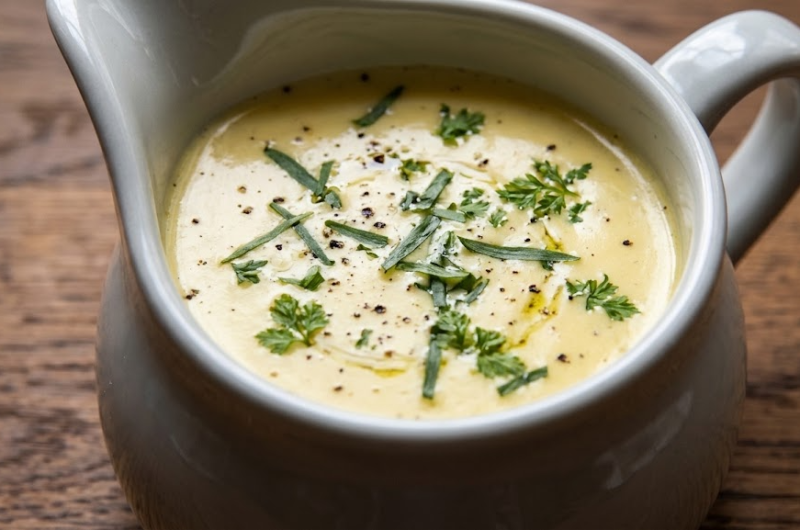
Classic Béarnaise Sauce (Delia Smith Inspired)
Course: SauceCuisine: French, BritishDifficulty: IntermediateServings
6
servingsPrep time
10
minutesCooking time
10
minutesTotal time
20
minutesCalories
240
kcal20
minutesA classic béarnaise sauce with a quick tarragon-shallot reduction, whisked egg yolks, and warm butter for a smooth, rich finish. Perfect with steak, salmon, and asparagus.
Ingredients
- For the tarragon reduction
2 tbsp white wine vinegar
2 tbsp dry white wine (or water)
1 small shallot, very finely chopped
1 tbsp fresh tarragon leaves, chopped (plus extra to finish)
6 black peppercorns, lightly crushed
- For the sauce
3 large egg yolks
175g unsalted butter, melted and kept warm
1–2 tsp lemon juice, to taste
Pinch of salt, plus more to taste
- To finish (optional but lovely)
1 tbsp fresh tarragon, finely chopped
1 tbsp fresh chervil or parsley, finely chopped
Directions
- Set up a gentle bain-marie (a bowl over barely simmering water) and melt the butter; keep it warm, not hot.
- Simmer vinegar, wine, shallot, tarragon, and peppercorns until reduced to about 1 tablespoon; strain and cool slightly.
- Whisk egg yolks with the warm reduction in a heatproof bowl.
- Place over the bain-marie and whisk until thick, pale, and leaving ribbons.
- Slowly drizzle in warm butter while whisking constantly to form a stable emulsion.
- Season with salt and lemon juice, then stir in chopped herbs.
- Keep warm for a short time only (off the heat), then serve immediately.
Notes
- Keep the heat low. Steam should be gentle, never aggressive, or the yolks can scramble.
- If the sauce thickens too much, whisk in 1 tsp warm water to loosen.
- Best eaten fresh, but you can refrigerate and rewarm very gently (see Storage section).